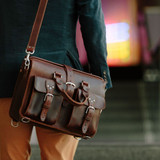





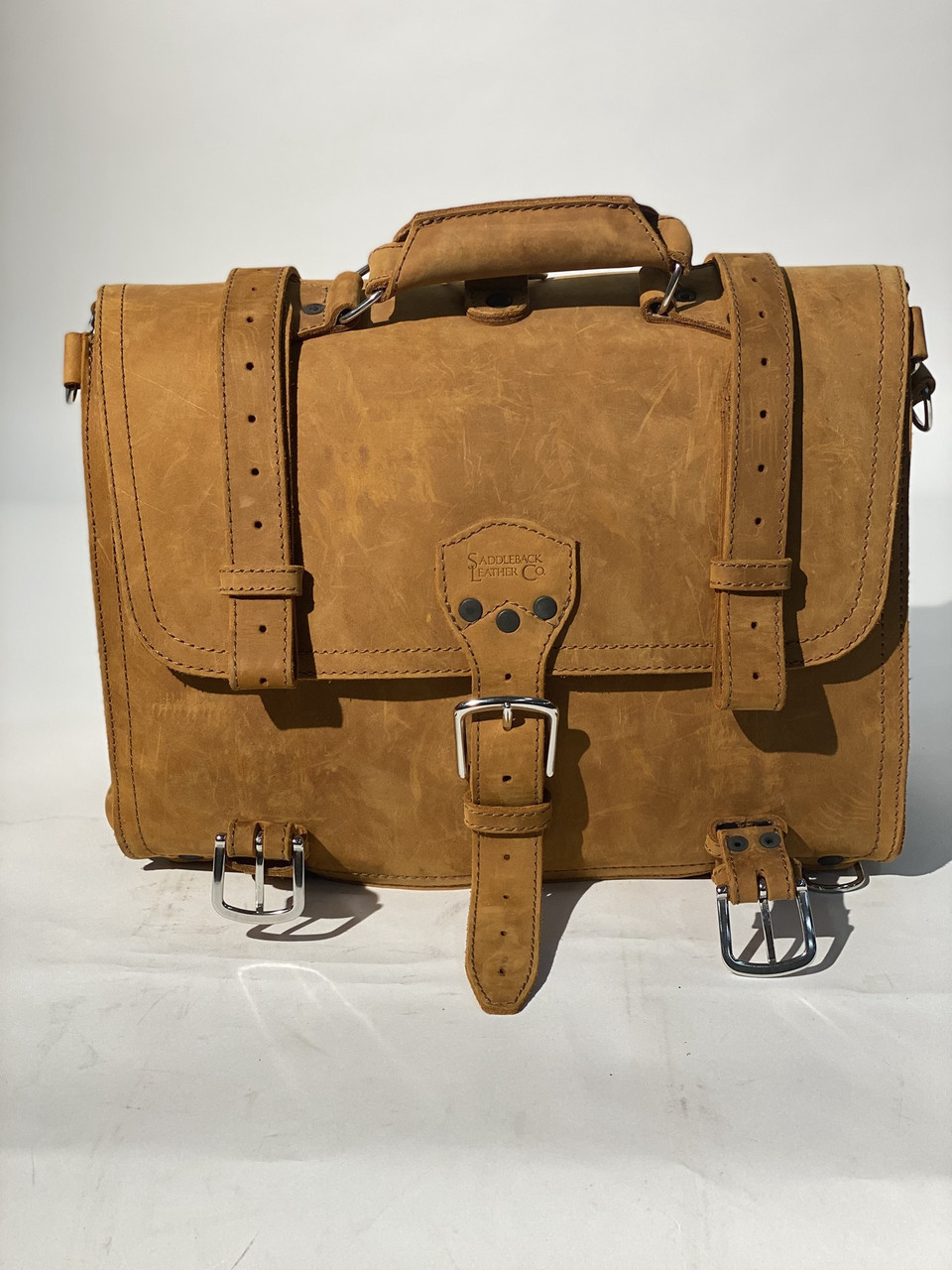
Saddleback Classic Briefcase in Full Grain Boot Leather, developing patina over decades
I once had a guy in Juarez try to sell me a “Rolex” for twelve bucks. He looked me dead in the eye and said, “Es real, amigo.” The leather industry pulls the exact same move every day, just with fancier packaging.
If you’ve ever shopped for a leather bag, wallet, or belt, you’ve seen the terms: full grain, top grain, genuine leather. They sound like quality tiers, and they are. But the leather industry has spent decades making them as confusing as possible. On purpose.
After 20+ years of making leather products (and after making a viral video showing exactly how to knock off our bags), I’ve seen every trick in the book. Here’s the honest breakdown the industry would rather you didn’t know.
Full Grain Leather: The Stuff That Actually Gets Better With Age
[IMAGE: Full grain leather showing natural markings, each piece unique]
Full grain leather is the complete outer surface of the hide. The epidermis intact, with all its natural grain, pores, and character marks. Nothing sanded off, buffed away, or artificially coated. What you see is what the animal grew.
Why this matters:
- Strength: The outer grain is the densest, toughest part of the hide. Removing it weakens the leather significantly.
- Patina: Full grain develops a rich color change over years of use. It’s what turns a bag from something you bought into something you own. My son’s backpack looks completely different now than when he first got it. Honestly, it looks better.
- Breathability: The intact pore structure means full grain leather breathes better than coated or corrected leathers.
- Longevity: With proper care, full grain leather can last 50 to 100+ years. We back this with a 100-year warranty because we’ve seen the evidence. A $649 briefcase over 100 years is $6.49 per year. You can’t get a decent taco for that anymore.
Top Grain Leather: The Pretty One With No Backbone
Top grain leather starts as full grain, then gets sanded and refinished to remove natural markings. Looks uniform and “cleaner,” but that uniformity comes at a cost.
The sanding removes the strongest part of the hide. Top grain is weaker, less breathable, and won’t develop the patina that makes full grain so distinctive. It’s the leather equivalent of a PT Cruiser. Looks kinda interesting at first, then you live with it and realize you’ve made a terrible mistake.
Many luxury brands use top grain as their standard and price it as premium. It’s not bad leather. It’s just not the best.
Genuine Leather: The Name That Lies to Your Face
Here’s where the industry gets deceptive. “Genuine leather” sounds reassuring. It’s real leather, right? Technically, yes. But in the grading hierarchy, “genuine leather” is the lowest usable grade. That’s like calling a hot dog “genuine meat.” Sure. But do you really want to think about it?
Genuine leather is what’s left after the top layers have been split off for higher-grade uses. It’s thin, weak, and often coated with plastics to look better than it is. It will crack, peel, and fall apart within 1 to 3 years of regular use.
How the Industry Uses This Confusion (And Why I Made That Video)

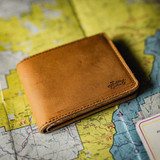
Saddleback Front Pocket ID Wallet, $49 with a 100-year warranty
Years ago, I made our “How to Knock Off a Bag” video. I literally showed the world how to make a cheap copy of a Saddleback bag, step by step. My wife Suzette thought I was crazy. But I figured if people could see exactly where corners get cut, they’d understand what they were paying for.
After it went viral, the emails from competitors’ customers were staggering. People paying $300 to $500 for bags marketed as “premium leather” that fell apart in months.
The trick works because vague descriptions (“premium leather,” “fine Italian leather,” “genuine leather”) sound impressive but mean nothing specific. Most consumers can’t tell the difference in a store, and by the time the product deteriorates, the return window has closed.
The Cost-Per-Year Math
A genuine leather bag that lasts 18 months means you buy 6 or 7 bags over a decade. That’s 6 or 7 times the raw materials, the manufacturing, and the landfill space.
A single full grain bag that lasts decades (or a century) is better for your wallet and the planet. And your grandkids will fight over it when you’re dead. We actually say that. “They’ll Fight Over It When You’re Dead.” Some people think that’s morbid. I think it’s the best compliment a product can get.
How to Protect Yourself
You don’t need a degree in hide tanning. Just do these four things:
-
Ask specifically: “Is this full grain leather?” If they say “genuine leather” or “real leather,” that’s your answer. It’s like asking someone if they graduated college and they say, “I attended college.” Hmm.
-
Check the warranty: A 100-year warranty means the maker trusts their leather. A 1-year warranty means they don’t.
-
Look at the edges: Full grain leather has a consistent, dense cross-section. Genuine leather often shows layers or a stringy edge. If it looks like a lasagna from the side, walk away.
-
Feel the weight: Full grain leather is heavier because it’s denser. If a “leather” bag feels surprisingly light, question what’s actually in your hands.
[IMAGE: Full grain leather with natural character marks, every bag is one of a kind]
I started Saddleback because I was living in Mexico, teaching English, and I needed a bag that could survive being thrown on top of buses. So I designed one. Twenty-something years later, people are still carrying that same design, and the leather looks better now than the day they bought it. That’s what full grain does. It gets better. Everything else just gets worse.
Got questions about leather grades? Drop a comment or shoot us an email. I read more of them than my team probably wishes I did.
Dave