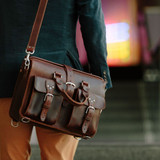





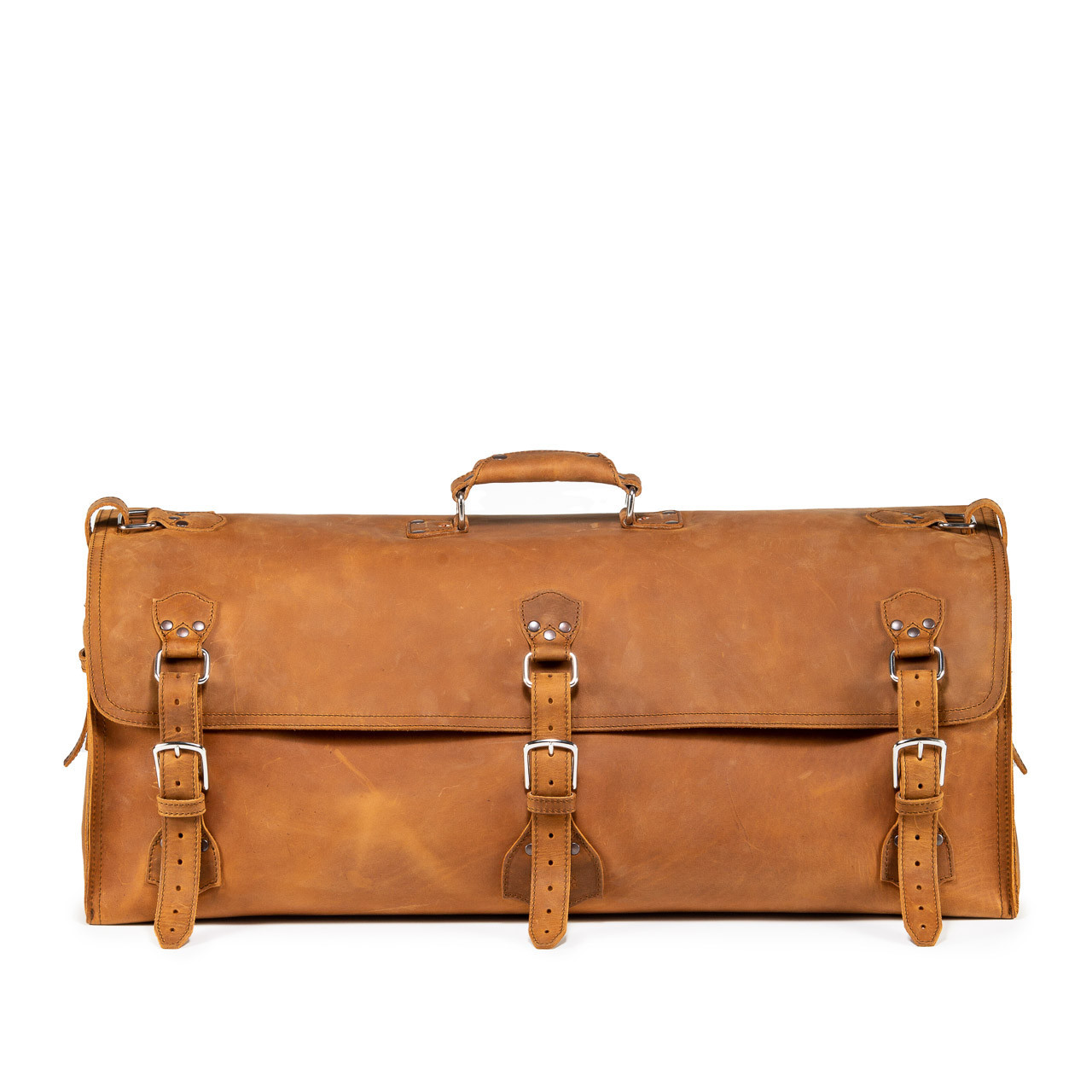
Saddleback 34” Beast Duffle, real full grain leather with natural texture
You’re about to drop real money on something somebody is calling “leather.” But is it actually leather? And if it is, is it good leather?
I’ve been making full grain leather goods for over 20 years. I even made a viral video teaching the world exactly how to knock off our products. So spotting fakes is basically a hobby at this point. Here’s everything I know.
Your Nose Knows More Than You Think
Real leather has a smell you can’t fake. Rich, earthy, a little sweet. When I’m walking through leather markets in León, Mexico, I can tell I’m getting close before I even turn the corner.
Fake leather (PU, PVC, bonded) smells like a shower curtain. Some manufacturers spray fake leather with “leather scent,” which is about as honest as a toupee in a windstorm. But the synthetic undertone is still there if you pay attention.
The Fingertip Lie Detector
Run your fingers across the surface. Real leather has slight variations in texture. Small pores, subtle grain patterns, minor imperfections that prove it came from an actual animal. Every piece is a little different because every hide is unique.
Synthetic leather feels uniformly smooth or has a perfectly repeated pattern stamped into it. Nature doesn’t do perfect repetition. Even my kids are completely different from each other, and they came from the same two people.
Check the Edges (This One’s My Favorite)
[IMAGE: Real leather edge, dense consistent cross-section with visible fiber structure]
Look at any raw or exposed edge. Real leather shows a fibrous, layered cross-section. You can see the natural structure of the hide. At Saddleback, we leave edges visible on many products specifically because it proves the leather quality. We’re basically showing off. Proudly.
Fake leather edges look clean-cut and uniform, often showing layers of fabric backing underneath a thin plastic coating. Trench coat, fake mustache, the whole disguise.
The Water Drop Test
Place a small drop of water on the surface. Real leather absorbs water. You’ll see a slight darkening where the drop sits as it soaks into the porous surface.
Synthetic materials repel water. The drop beads up and sits on top like a marble on a kitchen counter.
The Burn Test (For the Brave and Slightly Reckless)
If you can test a scrap: real leather chars and smells like burnt hair (it’s protein-based, just like hair). Fake leather melts, bubbles, and smells like burning plastic.
I am not recommending you take a lighter to your expensive new bag. If you’re going to be dumb, you’ve got to be tough. Test scraps only.
The Wrinkle Test
Bend the leather. Real leather wrinkles naturally and unevenly, like skin on the back of your hand. The pattern changes with each flex.
Synthetic leather creases in uniform lines or cracks along stress points, especially after a few months. It ages the way a PT Cruiser ages. Badly.
Does It Have Some Heft?
Real leather is dense and heavy relative to its size. A full grain leather wallet should have noticeable weight. If a “leather” wallet feels as light as a nylon one, something’s off.
The Price Never Lies
A real full grain leather wallet for $15? No. A “genuine leather” briefcase for $89? You’re getting the lowest grade possible, if it’s leather at all. Good leather costs money because good hides, proper tanning, and industrial stitching all cost money. No shortcuts.
Buy cheap, buy twice. Buy quality, buy once. And then your grandkids will fight over it when you’re dead. (That’s actually our tagline. I’m very proud of it.)
Beyond Real vs. Fake: The Grade Matters More Than You Think

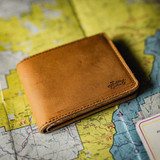
Saddleback Front Pocket ID Wallet, full grain leather that looks better with every year of use
Even after confirming leather is real, the grade makes a huge difference.
-
Full Grain: Complete hide surface. Strongest, best aging, develops gorgeous patina. This is what we use at Saddleback. Exclusively. Every single product.
-
Top Grain: Sanded and refinished. Real leather, but weaker and won’t develop that patina.
-
Genuine Leather: Don’t let the name fool you. Lowest usable grade. Cracks and peels within one to three years. “Genuine” is technically true the same way a hot dog is technically food.
-
Bonded Leather: Ground-up leather scraps mixed with plastic. Barely qualifies as leather. The particle board of the leather world.
Why This Matters for Your Wallet (Literally)
The person buying $80 “genuine leather” bags every 18 months is spending repeated money. Over a decade, that’s $400 to $500 on bags that all went to a landfill.
The person who invests in a single full grain leather bag spends once and carries it for decades. My wife Suzette still uses a bag I made her back when we were living in Mexico. It looks better now than it did then. That’s what full grain leather does.
The math always favors quality. Always.
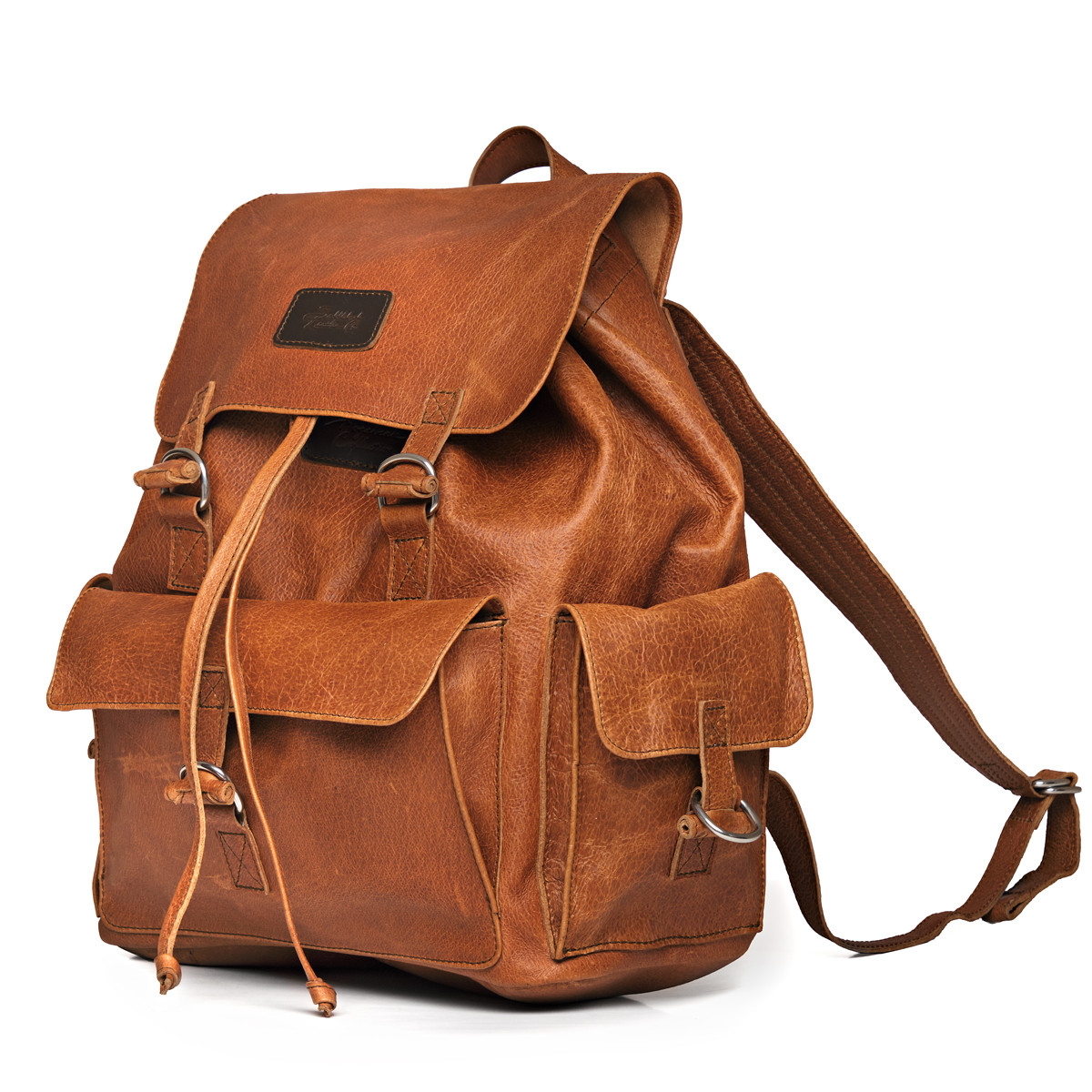
Saddleback Large Travel Backpack, built to last generations
Got a leather product you’re not sure about? Run it through these tests. And if you want to see how the fakes try to copy real leather, watch our “How to Knock Off a Bag” video. I gave away all our secrets, and it’s still one of the best decisions I ever made.